


Škrlet is appearing ever more frequently on the wine lists of restaurants and hotels, and oenologists and sommeliers now see a fresh opportunity to introduce the variety to the public through its pairing with Mediterranean cuisine.
We recognise Škrlet first and foremost as a light, airy wine, yet its potential reaches beyond the borders of its home region, the hills of Central Croatia. Dalmatia, Kvarner and Istria call for exactly this kind of wine to open a meal and to accompany dishes such as tuna carpaccio, prawns and langoustines. Škrlet pairs beautifully with these dishes, said sommelier Josip Orišković at the Škrlet 10 in 1 workshop, organised in Zagreb by the Bregovita Hrvatska Association of Winemakers and Grape Growers to present the variety’s potential to restaurateurs and hospitality professionals.
Škrlet began to draw public interest again a few years ago, thanks above all to the winemakers who raised its quality and started presenting it to the market together. Orišković explained that Škrlet draws its strength from its own genome, but also from the climate and the soil, while Ivana Gelo of the Seletković winery added that the variety is on an upward trajectory because the winemakers of Moslavina stand united behind it.
Škrlet is currently grown on just 70 hectares, which is modest by global standards, but it is our great pride. That is why we want it to be recognisable in Croatia and beyond, and I believe our unity can help. Every winemaker has their own style, and each winery also offers Škrlet in several styles. It goes with a starter and a main course, and on its own it can even be a dessert wine, said Ivana Gelo. Petra Miklaužić of the Miklaužić winery added that, thanks to the violet flecks on its berries, Škrlet develops a structure on the boundary between white and red wine.
Although it is a light white wine, its reddish underpinning allows it to stand up to heartier dishes. We are the pioneers in making Škrlet as a light, airy wine that suits a wide range of courses, and I am glad that other winemakers have followed with their own stylistic take, she said. For now, the growing demand for Škrlet is the challenge facing producers.
Its place on the Croatian wine scene is clear, but what we lack is volume. If we want Škrlet to become a leading name on the market, over the next ten years we must make progress in expanding the planted area
or converting vineyards from international varieties to Škrlet. Moslavina, with Škrlet, has great potential on the wine scene, and we need to seize it, said Hrvoje Košutić, representative of Vina Košutić.
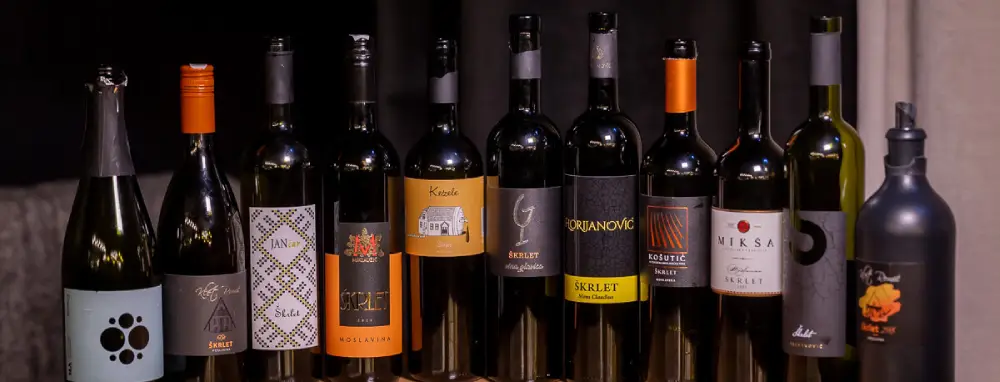
At the Škrlet 10 in 1 workshop, guests tasted Škrlet wines from the Florijanović, Glavica, Jančar, Kezele, Klet Romić, Košutić, Miklaužić, Mikša, Seletković and Voštinić Klasnić wineries. Sommelier Orišković pointed out that Florijanović’s 2022 Škrlet won a gold medal at Decanter, and that Glavica’s Škrlet is the first Croatian wine to hold the Demeter biodynamic certification.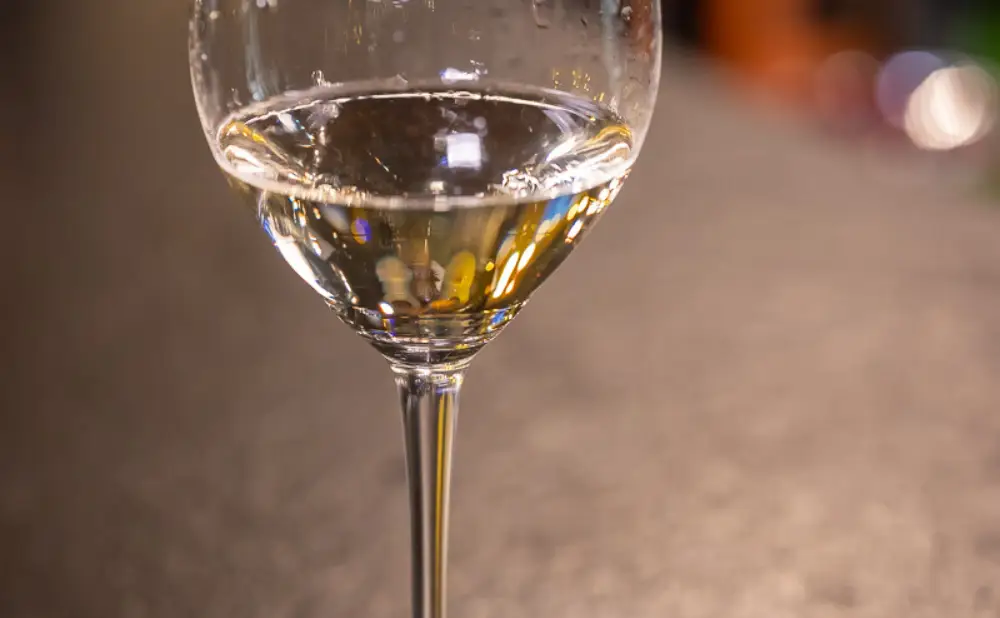
MIVA, the distributor of the Austrian glassware maker Riedel, presented the Riedel glass for Škrlet. It bears the mark of a ram, designed by the agency Bruketa&Žinić&Grey, because Škrlet is also known as ovnek žuti (the yellow ram).
Photographs: Matej Ščavničar
05.04.2025.


