 Written by: Tomo Jakopović
Food and wine pairing! Snobbery or sheer necessity? To dig a little deeper into the world of food and wine we would need far more space than we have, but one has to start somewhere. Humankind’s effort to match a dish with a fitting wine dates back to ancient Rome. I find utterly incomprehensible – and, sadly, still widespread here – the notion that all of us who value the culture of the table and try to savour the pleasures of food and wine to the full at every meal are eccentric oddballs.
We are often called eno-gastro snobs, yet for us a shared meal with the people we love is a chance to enjoy good company alongside good food and wine. Intolerance of a different approach or philosophy, and the refusal to take suggestions from those who are trained and competent, often ends in a diner’s dissatisfaction at the restaurant. Since I believe there is boundless room for improvement in this field, I will try to bring some pairing techniques and principles closer to everyone willing to take a step further in their approach to the table.
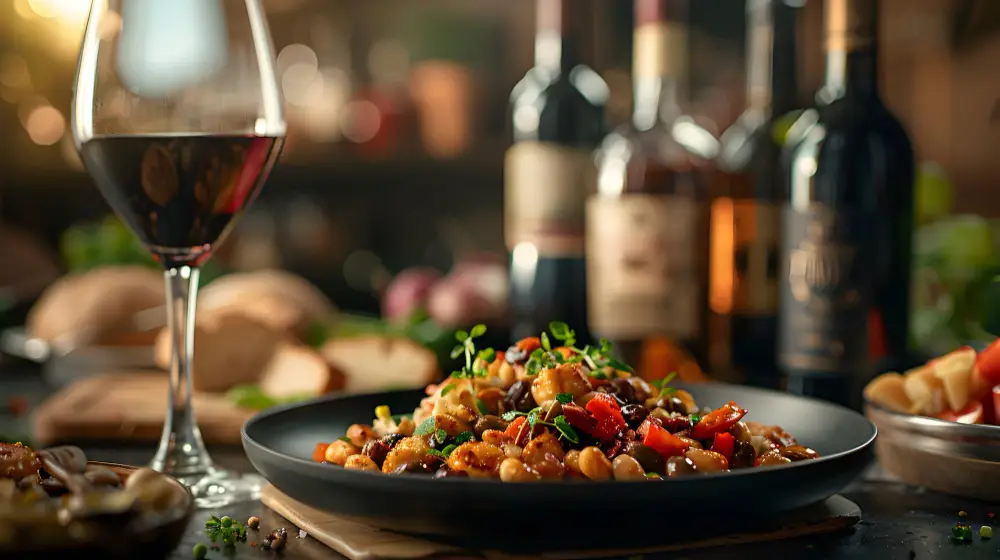
Amid a flood of wines in the most diverse styles and varieties, and the unwieldy, sprawling, overlong menus in our restaurants, it is often hard to choose a wine that would make the dish better and, conversely, let the dish make the wine more enjoyable and beautiful. To many this does not matter, and that is a perfectly legitimate stance that deserves respect – but there are also those of us who seek something more than satisfying the basic human need to still hunger and thirst. All will be well if the restaurant has a sommelier or a well-trained waiter, but that is often not the case in the à la carte restaurants where the highest level of guest service is expected. There is nothing left to do but take matters into your own hands.
English, French or Italian. There are three basic schools of food and wine pairing. The English school teaches us to be guided by our own choice and to follow no rules at all – the rule being that there are no rules! Such thinking is legitimate on a personal level, but it leads us into complete chaos and is professionally quite unacceptable. The French school is far more precise, yet still not precise enough to meet the challenges of modern eno-gastronomy. It comes down to techniques that are acceptable and usable, but still underdeveloped, so it gives us only broad guidelines. – Wines should be served from the least alcoholic towards the stronger ones. – Leaner wines (lighter-bodied) before the more robust. – Wines served at lower temperatures before those requiring a higher serving temperature. – White wines always before reds. – Serve a wine only when it is at its optimal stage of development. – Every dish demands its own wine (whatever that may mean!!!). Drink a little water when changing wines. – In tasting flights, use more “great” wines. – Do not serve serious red wines with fish, crustaceans and shellfish. – Do not serve dessert wines with red meats.
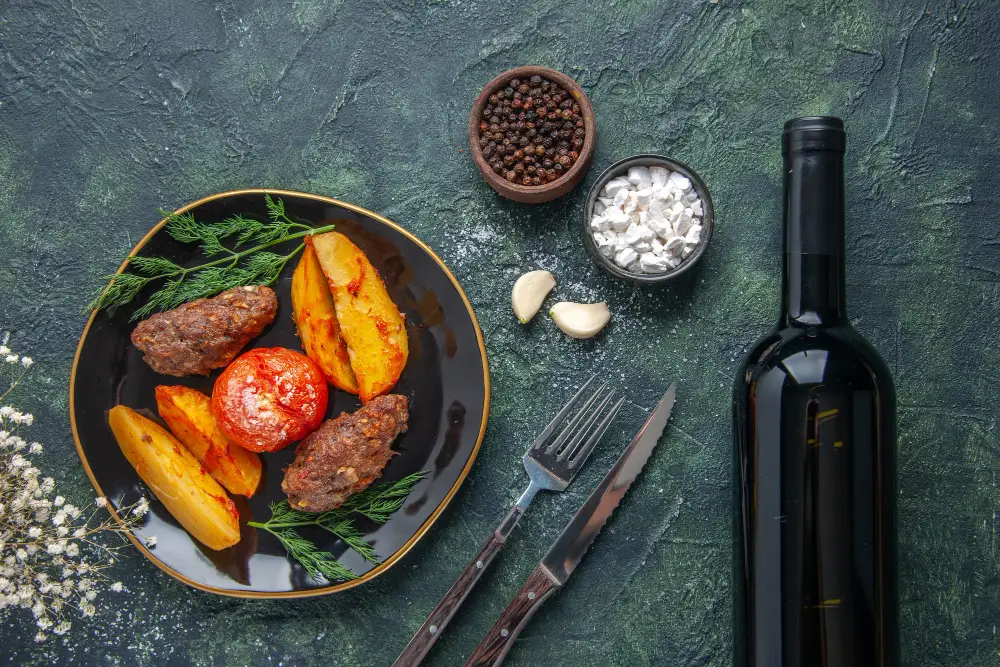
The Italian school is the most precise and the only one grounded in science; it began to be developed in the second half of the 20th century by Italian eno-gastronomy experts, led by the celebrated Luigi Veronelli. His idea of the contrast of flavours became the foundation of food and wine pairing, which Italian sommeliers – led by Prof. Pietro Mercadini in 1978 – refined and brought to a globally acceptable level. Before we go deep into the most objective possible way of pairing food with wine, let me set out a few interesting principles that are everywhere and that people follow, but which, whatever the arguments, are too simplistic and can in no way be a rule. – The traditional principle we associate with regional dishes and wines, often tying them to folk customs and habits reaching back to bygone, long-forgotten times. Most often a wine from the same area is served with traditional dishes, so, for example, I might cite sardines with red wine and fiš paprikaš (a Slavonian fish stew) with white wine. – The seasonal principle tells us that in the warmer parts of the year, when lighter food is prepared – pasta, salads, white meats, fish, crustaceans and shellfish, with plenty of vegetables and fruit – lighter whites, rosés and, increasingly, sparkling wines are called for.

In the winter period, when “heavier”, more calorific dishes are prepared – cured meats, various roasts and stews with rich side dishes – serious reds and powerful, structured whites are the best match. – The psychological or poetic principle is inspired by some special event, moment, place or person, so that regardless of the dish ordered and against all logic, ill-suited, expensive wines are ordered, often sparkling, to underline the significance of the moment (a romantic date, a family outing, a closed business deal and the like). People often evoke such memories, reopening the very same wines at those moments as a reminder of some striking event from the past. – The principle of valorisation rests on the philosophy of highlighting the best qualities of the dish, the wine, or both. When a dish is to be showcased, it must be paired with an unobtrusive wine that sits below the dish in structure and aroma so as not to cover it in any respect; and when the wine is to be showcased, the dish must be restrained, without pronounced features, so that the wine can express itself fully. The third and most demanding technique is when we want to valorise both the dish and the wine, which calls for the greatest knowledge and skill – so let that serve as an introduction to the final principle, that of contrast and concord. – The principle of contrast and concord is the only one that is entirely correct and founded on scientific methods.
When we speak of contrast, the idea is that certain characteristics of the wine we intend to use will be set against those of the food; so, if the food is fattier, we counter it with a fresh wine of pronounced acidity. If a dish tends towards sweetness (as with carrot, peas, onion, pasta, crustaceans, pork and red meat), we look for a wine with pronounced minerality, or a sparkling wine. If a dish tends towards acidity (never vinegar or lemon), coming for instance from tomato, then we must on no account choose a wine of pronounced acidity that would further heighten the perception of sourness in the mouth, but rather one that offers softness and sweetness. If, on the other hand, we find succulence in the dish, we counter it with a wine of pronounced alcohol and tannin that will dry the mouth of the juices intensified further by chewing. We need the same characteristics when the dish shows richness (fattiness in liquid form), in order to cleanse and dry the palate. The difference between fattiness and fat is that fattiness is in liquid form and fat in solid form – for example, we consider chilled butter to be fat, and melted butter fattiness.

The second technique of this principle is concord, or matching, where the approach is entirely the opposite: we seek certain features of the food to match those of the wine. If a dish is rich in aromas, we look for aromatic wines. To desserts that carry sweetness we pair a sweet wine – the sweeter the dessert, the sweeter the wine must be. It is important that the wine is always at least as sweet as, or sweeter than, the dessert, otherwise an unpleasant bitterness appears in the mouth. Spiced, piquant dishes are paired with wines carrying residual unfermented sugar (most often off-dry). Taking into account all the principles and techniques for successful pairing, it is especially important to pay attention to the structure of the dish and the wine, which should match – be balanced – so that we do not end up pairing light dishes with powerful, robust wines and, conversely, light, lean wines with structured, heavy dishes.
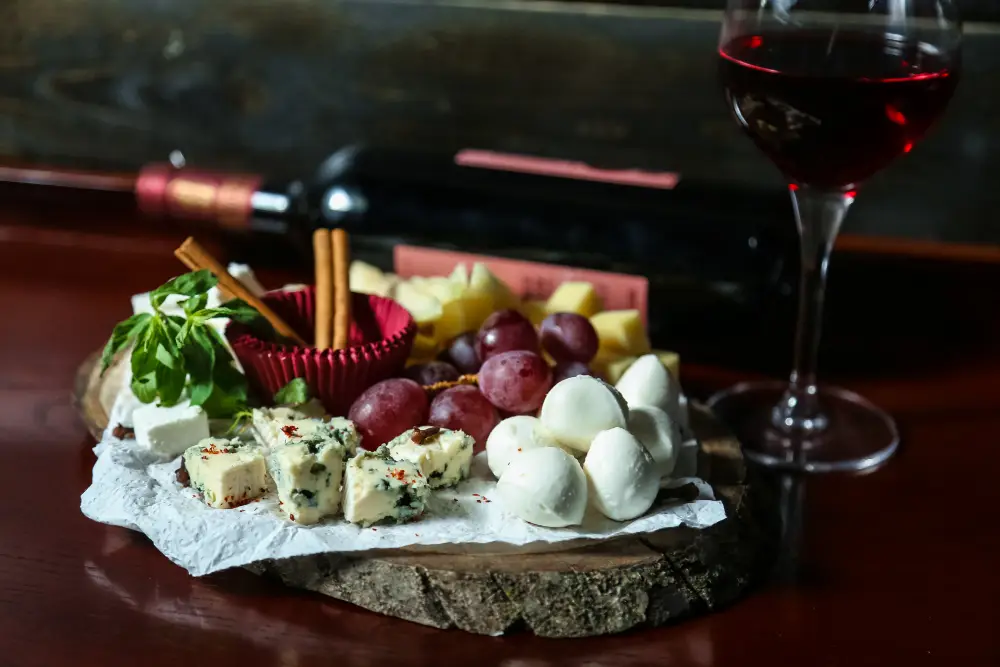
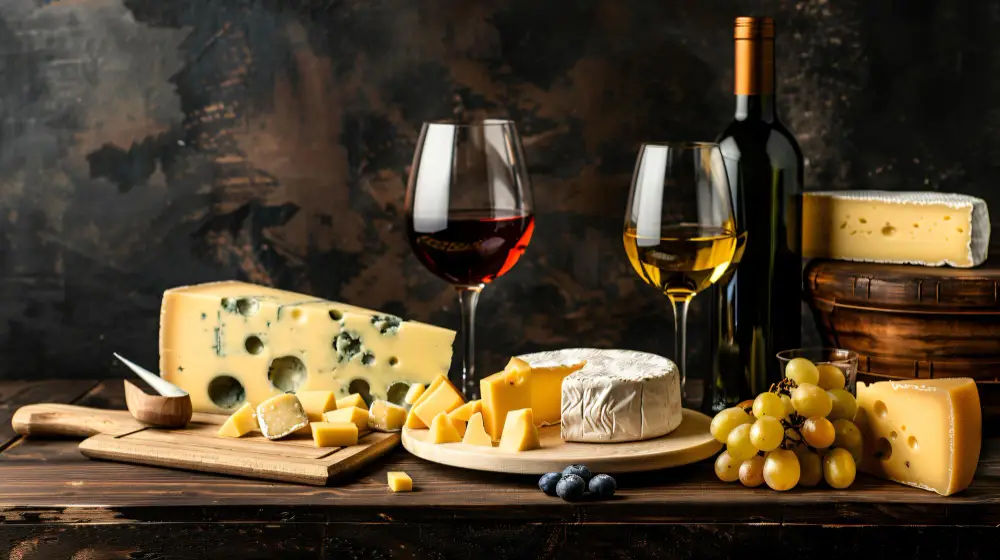
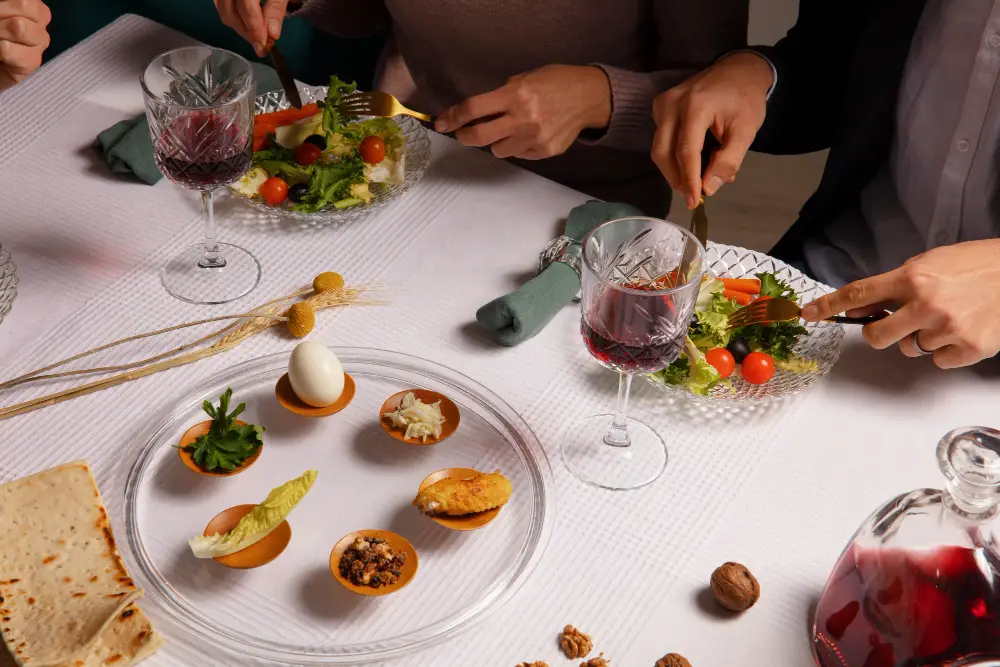
And to close, a few tips. If you are not sure you have arranged everything well and whether the wine suits the dish, put a piece of the dish in your mouth with its side, sauce or whatever else is on the plate, chew it well and, before you swallow, wash it down with a sip of wine, swallow together and observe the sensation. If the food dominates, the wine is too weak; if you sense only the wine, it has overwhelmed the dish. If you sense food and wine at the same time and with equal intensity, and find it pleasant to boot, you have chosen well. When pairing food and wine, avoid salads, as they are most often dressed with vinegar or lemon, which are no friends of wine. Soups too are very demanding to pair, so if you are unsure of the wine, it may be better not to serve one at all. Cheeses are, with good reason, considered the most demanding to match, so I suggest you tackle them after you have tried all the techniques and principles above. And if all this seems superfluous and complicated to you – if you reckon an aged Plavac Mali from Dingač (the celebrated cru on the Pelješac peninsula) will suit your boiled egg best, or a young Žlahtina (a crisp white from the Vinodol coast) with venison fillet – you are entirely right; enjoy it, and leave these pairing tales to us oddballs. And yes: let your palate be your only criterion!