More than 2,500 years ago, Greek colonists established organised winemaking on the island of Vis, and the wine tradition remains a powerful symbol of continuity, resilience and the island’s deep connection to its history. After a decline in production at the end of the last century and the start of this one, the island’s winemaking is undergoing a revival, and the main driver of that success is the Vislander winery and its owner Marko Vojković, who chose to return to his roots, to restore a family wine production centuries old, and to build a modern winery. He stresses that he was inspired by a tradition and history in which wine was a matter of survival, when Plavac was bartered for food and represented the islanders’ main source of income.
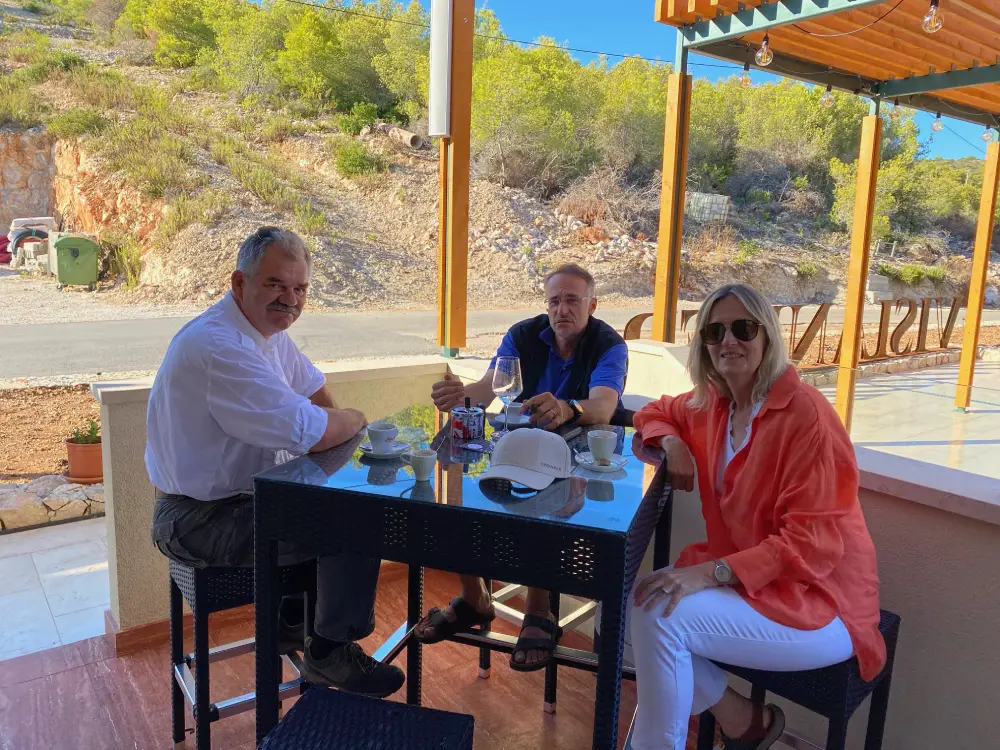
Vislander is a family winery whose wine production is based on indigenous grape varieties, primarily Plavac Mali and Vugava. Alongside them there is also Kuč, or Trbljan, which yields abundantly and accumulates high acidity, so it is used in producing sparkling wines. The winery emphasises tradition, but through a modern approach grounded in advanced technology and knowledge. Vislander is not a story about a trend, but about continuity: about wines with a firm imprint of terroir and a clear message of where they come from. The vineyards are spread across five locations: Dračevo polje, where Vugava and Trbljan grow, while Milna, Tihobraće, Ljubišće and Voščice are planted with Plavac.

In addition to the long decline in Vugava production, there was also a serious crisis of the variety’s identity, marked by below-average wines burdened with numerous problems caused by a lack of knowledge and modern technology. Today this variety, of unquestionably great potential and importance for the island of Vis and for Croatia, is experiencing a major return to the summit of Croatian winemaking, primarily thanks to the Vojković family. Vugava, or Bugava as the islanders call it, is produced at Vislander in three lines, Bugava Classic, Bugava Premier and Bugava Antique, with a clear distinction and idea.
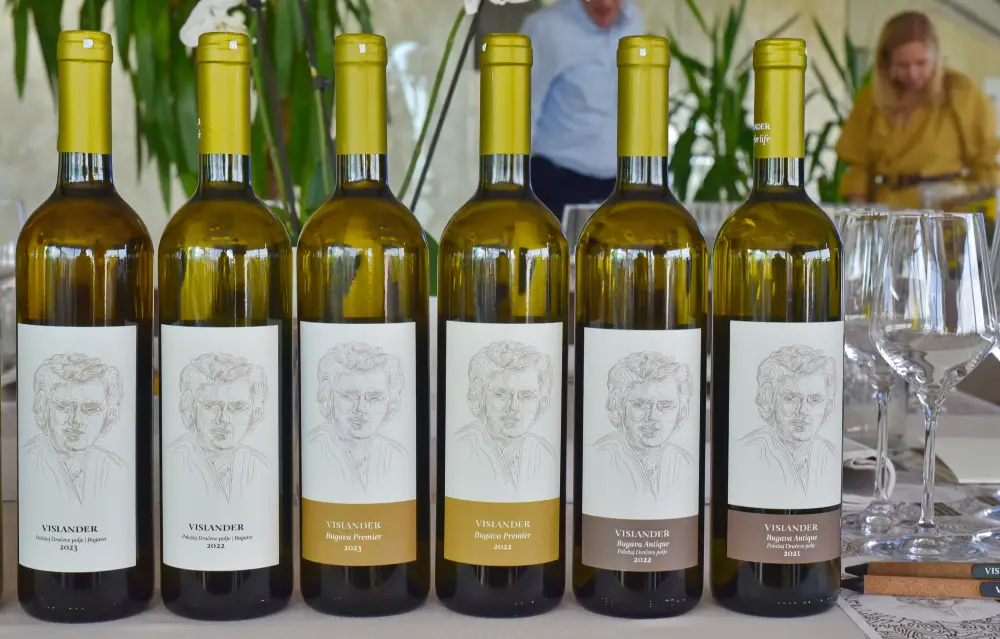
Bugava Classic is an approachable wine of pronounced varietal aromas, most often apricot, apple and meadow flowers, of medium body and high freshness. It is always produced in stainless-steel tanks and never goes to market in its first year. Given the minimal interventions in the cellar, the differences dictated by the specifics of individual vintages are clearly evident, while the style and quality always remain the same. In certain years it may carry somewhat higher alcohol, but the high extract covers it with ease, so the wines are always in accord and balance.
Bugava Premier is made from selected grapes, and the wines are more extractive, fuller and more powerful, yet thanks to high freshness and pronounced minerality entirely elegant. They are matured measuredly on the fine lees, so alongside the typical fruity–floral aromas we often also find notes of almond. Wines from this line are of pronounced character, rich flavour and full body, infused with an abundance of southern lusciousness. Through such an approach the variety’s potential comes to full expression, and the wines are steadfast and long-lived.
Bugava Antique is matured in a combination of oak and acacia barrels, and later brought together into the final product. With a feel for finesse and experience in dosing the wood, an added value is achieved for the Vugava, which handles such vinification excellently.
A great deal has been invested in Vislander’s reds, and all of them are made without the slightest compromise or pressure to release them too early. In Plavac Mali a firm imprint of terroir is noticeable, defined by the influence of the vineyards’ micro-locations. Marko realised that all four sites give him different wines, so he did not take the path of least resistance and blend them all into a single cuvée, but developed four different labels as reflections of the climatic and pedological specifics of each site. Thus the Plavac from Voščice is consistently elegant but never banal. It is of medium body, pronounced varietal aromas and high freshness, and wines of such characteristics and high quality are increasingly sought after on the market. The Plavac from Ljubišće is a little more structured and most often of moderate density.
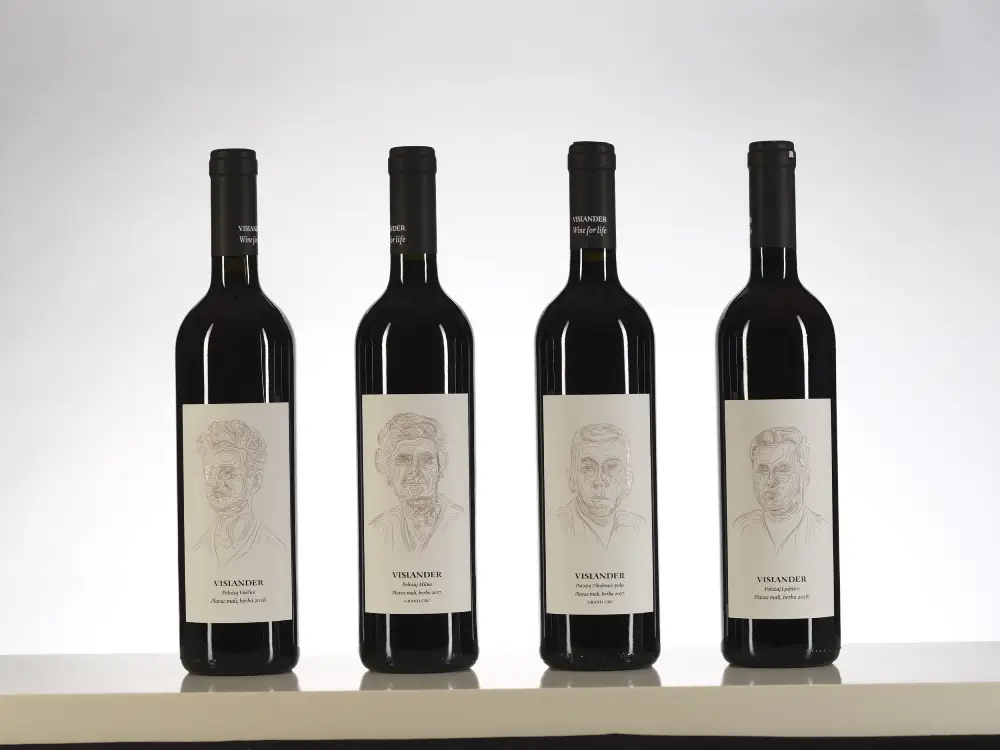
They are defined by an intense plum aroma, a lingering flavour and elegant minerality. From Milna the Plavac wines are stronger still, full-bodied, of layered aromas and rich flavour. Ripe tannins and high mineral freshness hold the balance against the alcohol, which, regardless of its level, varying from vintage to vintage, is always excellently integrated. And finally, the Tihobraće site consistently yields the most intense wines, full of character in a synergy of power and elegance. In these Plavac wines one senses finesse, a subtle touch of noble oak, perfect harmony and balance. The Tihobraće Plavac wines are long-lived, with great ageing potential, making them rewarding for collectors.

Sparkling wines are atypical for southern Dalmatia, but through careful analysis in search of the best stylistic form for Kuč, or Trbljan, Vislander realised that the variety’s characteristics are ideal for sparkling wines, because the grape accumulates exceptionally high acidity and is neutral in flavour; in the white sparkler named Komiško Bonda its character is given by a certain amount of Vugava, while in the rosé sparkler named Viško Bonda, Plavac from the Voščice site is blended in. Both sparklers are made by the traditional method in a brut version. They are well structured and noticeably fresh.