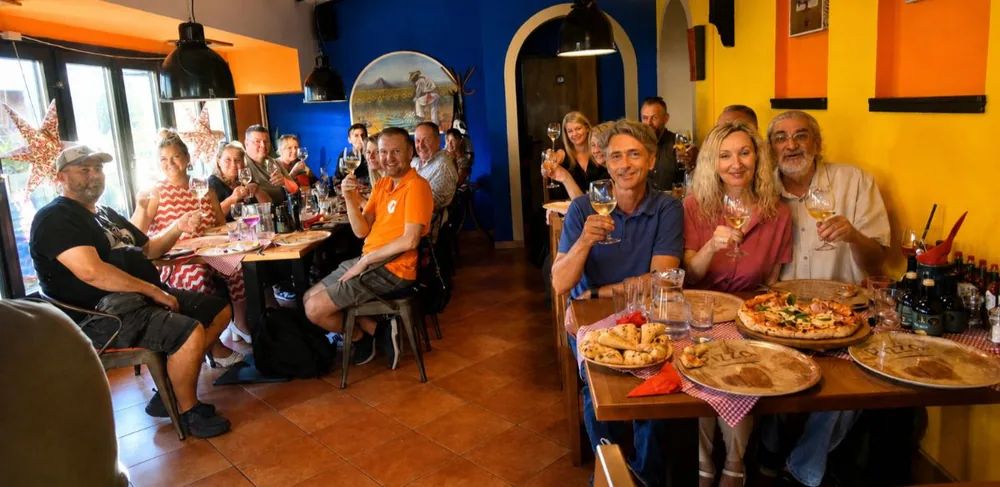
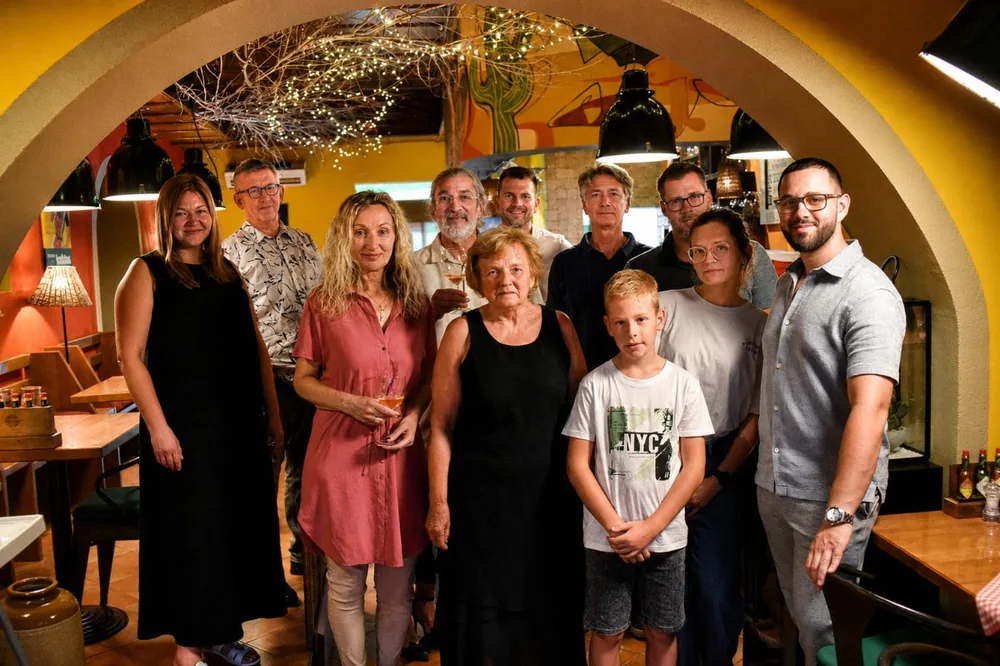
The first event of the food-and-wine project ‘Vino uz pizzu’ (Wine with Pizza), modelled on the already successful ‘Vino uz žlicu’ (Wine with a Spoon), was devised by Renata Cisar and Mustafa Topčagić, with bistro Kaktus in Velika Gorica hosting the opening evening. The idea behind the project is to show that top-quality wines can be paired with one of the world’s best-loved dishes — pizza.
For 34 years now, bistro Kaktus has been one of Velika Gorica’s most recognisable gastronomic destinations. Over the years owner Saša Haluga has built a reputation for a bistro known for its wood-fired pizzas, burgers and Mexican specialities.
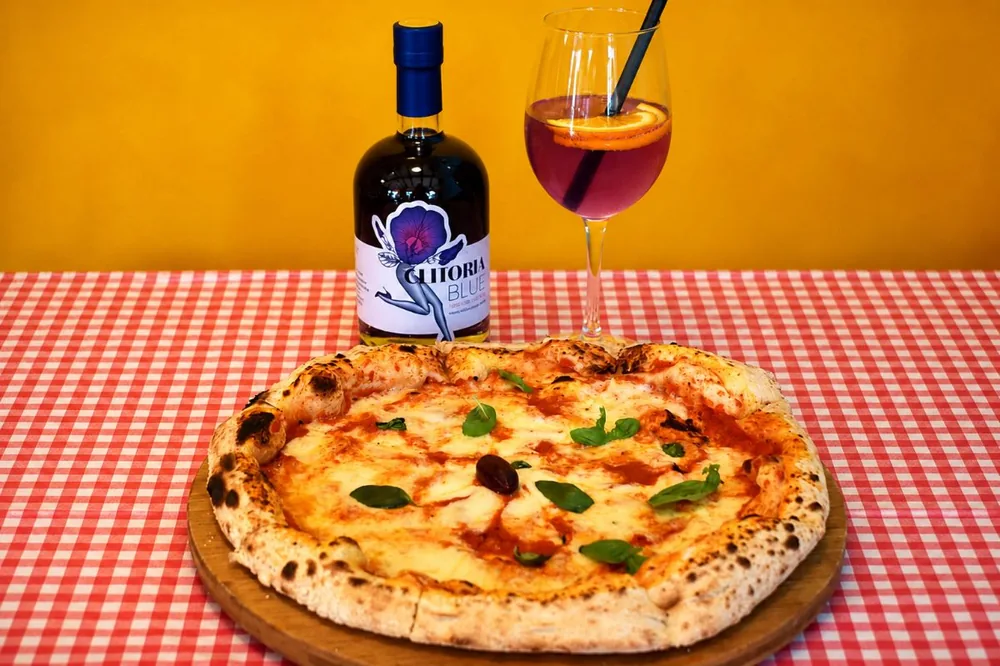
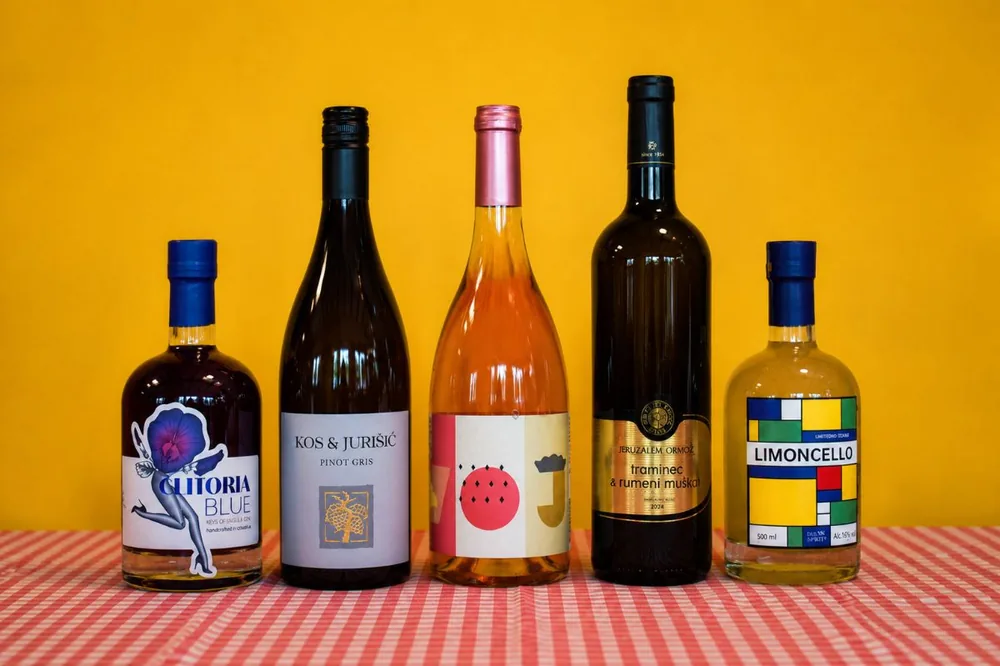
The evening opened with a Margherita pizza (tomato, mozzarella fior di latte, basil, olive), alongside which guests tasted a cocktail made with Gin Clitoria Blue from the Velika Gorica craft distillery Dum2Spirits — distinctive for turning blue when mixed with an acidic medium such as tonic. It proved an excellent combination, refreshing the palate between bites of the Margherita prepared by Kaktus’s pizzaiolo Matej Topić, last year’s winner of the Caputo Pizza Cup in Poreč, who took the title with precisely this pizza, one of the simplest and yet most demanding of all. Gin Clitoria Blue (which takes its colour from the butterfly pea flower, Clitoria ternatea) is aromatised with citrus along with mint, bay, rosemary and fennel — or, better put, with the plants growing around the house. Distillery owners Alen and Sanja Dumanić also produce ImaGINary and OaKy Gin as well as Allorino, a medicinal bay liqueur whose entire output is already reserved for known buyers. A particular hit is their Limoncello, made from fresh, fragrant lemons, with juicy flavours rich in essential oils. They source their herbs and fruit from the Neretva valley, where both of them come from. Their gins and liqueurs are made in small batches with an emphasis on quality botanicals and pronounced character, showing how contemporary Croatian craft spirits can stand shoulder to shoulder with the world’s best.

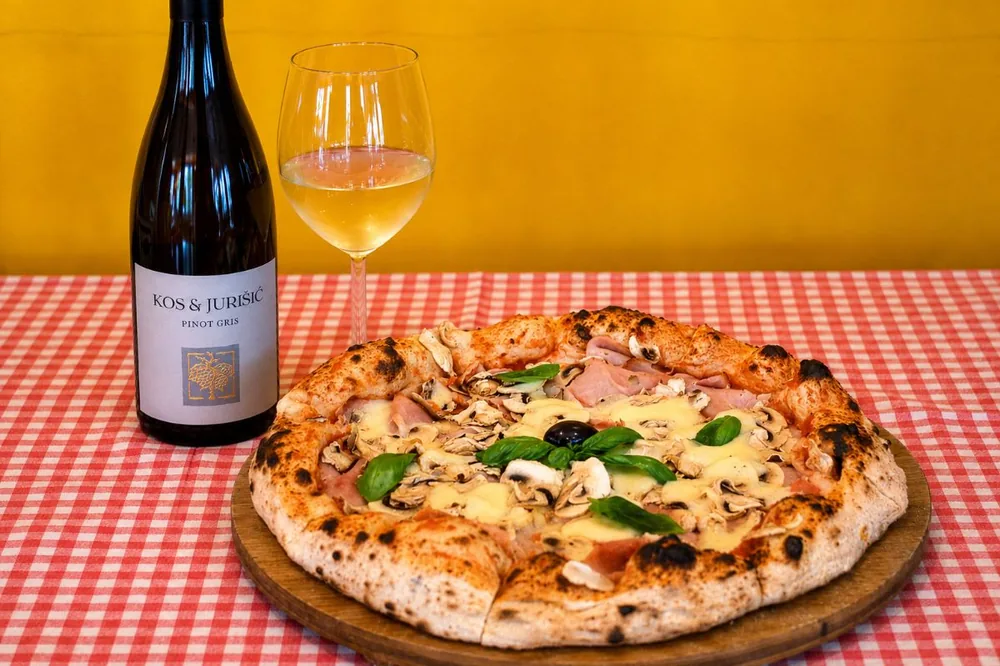
This excellent opening to the evening continued with a course pairing the Mixed pizza with Pinot Gris 2025 from the Kos-Jurišić winery of Nespeš, in the Zelina vineyard district. The richness of the topping — tomato, ham, mozzarella fior di latte, mushrooms and other ingredients — called for a wine fresh enough, yet serious enough, to keep up with that intensity of flavour. The Pinot Gris proved an excellent choice thanks to its fruit, appealing acidity and harmonious fullness, which drew all the elements of the pizza together into a refined pairing. The wine shows an intense, refined nose of dried apple, apricot and fig, with discreet notes of vanilla and cinnamon. The Kos-Jurišić winery upholds a family winemaking tradition, also producing Kraljevina, Graševina, Chardonnay, Yellow Muscat and Kerner. At the top of their vine-covered hill sits Wine Paradise, one of the more attractive destinations on the Zelina Wine Road, offering guests tastings with a view of Sljeme, accommodation in the middle of the vineyards and an extensive food offering. With home-made breakfasts, walks through the vines and an authentic setting, it gives visitors a complete experience of wine tourism and the hospitality of the Kos-Jurišić family.
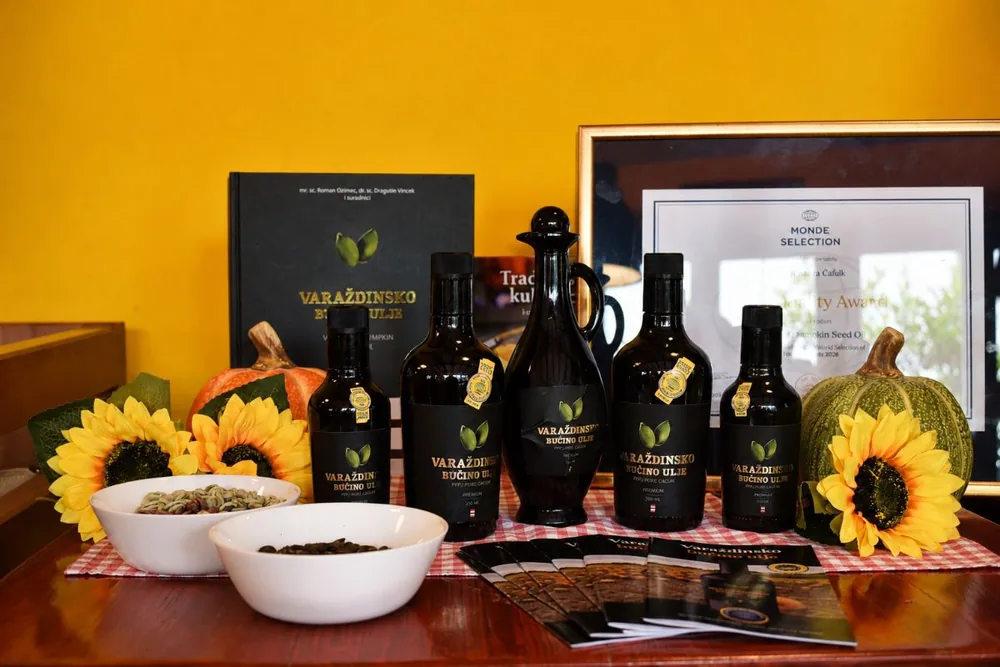
Alongside the home-made flatbreads and pizzas, guests were served the champion Varaždin pumpkin seed oil from the Jurica Cafuk family farm in Domitrovec, in the municipality of Vidovec in Varaždin County. This outstanding pumpkin seed oil, which carries a protected geographical indication, was presented by the holding’s owner Marija Cafuk. She is the fifth generation of a family growing the celebrated Varaždin cabbage and a keeper of its seed, a product with a designation of origin. Alongside cabbage and potatoes, the Cafuk family are significant producers of Varaždin pumpkin seed oil, which wins the highest quality awards; they produce around 1,000 litres a year. Rich in vitamins, minerals and antioxidants, pumpkin seed oil is known for its beneficial effect on health and as an ideal addition to many culinary creations. Its intense nutty aroma, fullness of flavour and characteristic dark green colour confirmed once again why Varaždin pumpkin seed oil ranks among the best and most highly regarded in Croatia and well beyond.
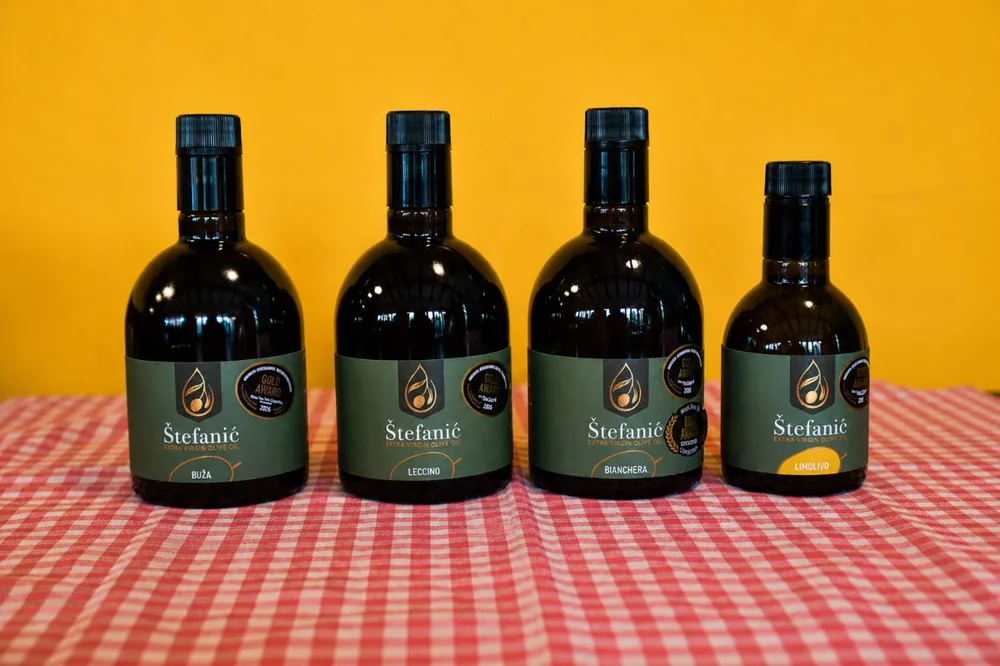
Guests were also offered a tasting of Istrian extra virgin olive oil from the Anđelo Štefanić family farm in Štefanići near Motovun. Owner Denis Štefanić presented his oils: Bianchera (Istarska Bjelica, with notes of green apple, almond and freshly cut grass), Buža (a rich fruity nose with a subtle peppery finish), Leccino (mild but complex, with notes of ripe fruit and herbs) and Limolivo — a perfect harmony of the fruit of the olive and fresh citrus. This outstanding, award-winning oil, which takes gold medals outside Croatia too, is produced from the finest olives in their grove of 1,500 trees, and the family extends its plantings every year. Freshness, pronounced fruit, notes of green olive and balanced pungency fitted neatly alongside the flatbreads and pizzas, showing how quality olive oil is an indispensable part of any authentic gastronomic story.
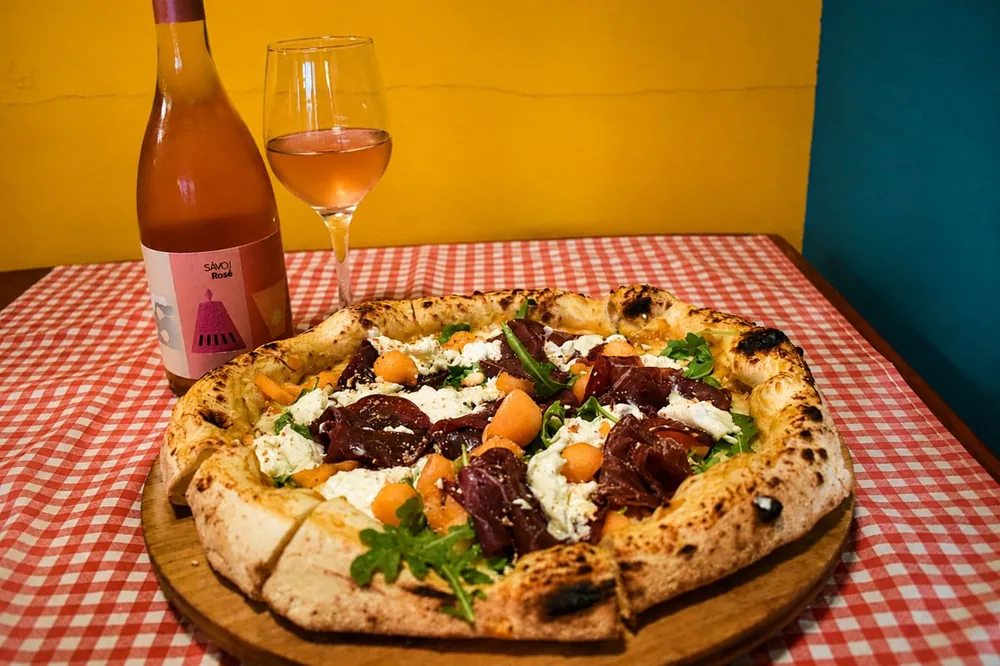
The third course brought a Bresaola pizza with Savoy Rosé 2025 from the Belje winery. Delicate air-dried beef, rocket, Parmesan, melon, pepper drops, toasted hazelnut, burrata and aceto cream wove together neatly with the fruity, fresh and elegant rosé. Savoy Rosé brought notes of strawberry, raspberry and red berries that further underlined the refinement of the pizza, making it the best match of the evening in the judgement of the food journalists present. Belje’s representative Robert Moržan pointed out that this is a wine whose freshness and pronounced fruit make it an excellent partner to a wide range of summer and Mediterranean dishes. The Sávoj line (which also includes Blanc, Rouge, Orange and Graševina) is a new brand from the Belje winery, named after Prince Eugene of Savoy, who laid the foundations of organised viticulture in Baranja at the beginning of the 18th century. The line is conceived as a modern one, with approachable wines for everyday enjoyment and an emphasis on fruit character. The Belje winery has a little over 500 hectares of vineyards on Banovo Brdo in Baranja. The grapes come exclusively from their own vineyards, and the wines also mature in a 500-year-old cellar in Kneževi Vinogradi. In recent years Belje has taken a major step forward in the premium segment while retaining the core ranges that offer very good value for money.
During the evening AVA.LIT was presented — a software package for the hospitality industry which, with modules developed specifically for the sector, supports a broad spectrum of operations. Representative Roberto Radelić stressed that their software solutions are comprehensive and adaptable to everyone, from fast food kiosks, clubs, cafés and restaurants through to fitness centres and hotel systems. The company Utiliter was founded in Varaždin, has operating offices in Zagreb and Split, and has been listed among the 50 fastest-growing IT companies in Central Europe according to Deloitte. Their services include, among other things, tracking staff schedules and arrivals at work, ordering food and drink and processing payments and, depending on requirements, they also allow stock levels to be monitored. The system is adapted linguistically as well, for instance for foreign workers who do not speak Croatian, as well as for the international languages used in hospitality.

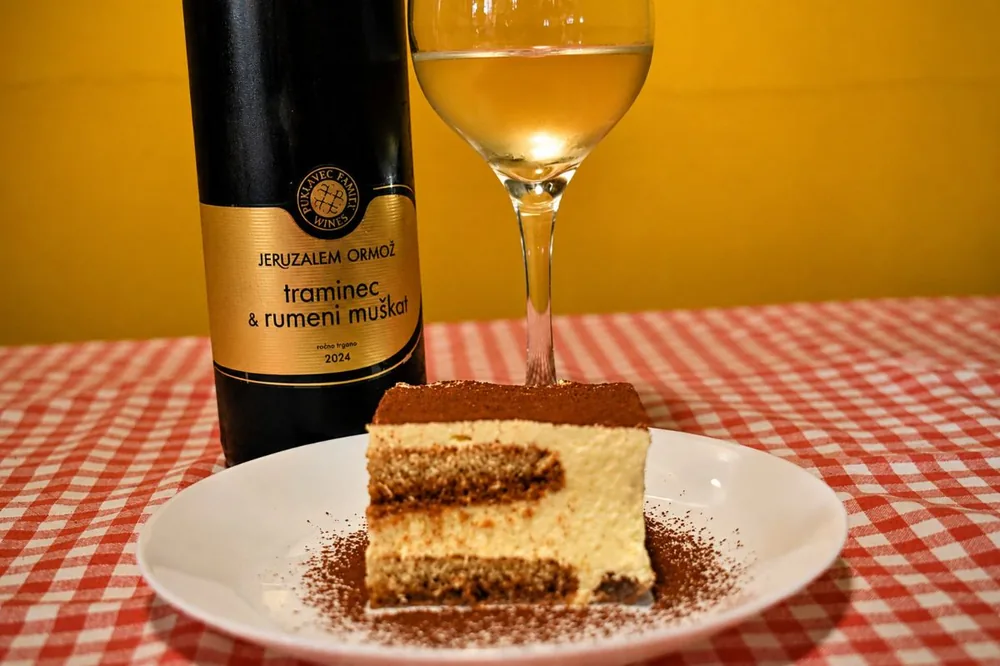
To finish, Tiramisu was served with Traminec & Rumeni Muškat 2024 (a 50:50 blend) from the Slovenian winery Puklavec Family Wines. These aromatic varieties, with their floral, fruity and spicy notes, accompanied the dessert’s creamy texture harmoniously, while the wine’s natural sweetness rounded off the end of the meal nicely without any sense of weight. The wine proved a very successful blend of aromatic varieties. Its creator, oenologist Darija Peček, said that Traminac brings opulence and spice notes, while Yellow Muscat gives freshness and vivacity. Puklavec Family Wines is one of Slovenia’s largest wine houses, based in Ormož. The vineyards lie in the Jeruzalem-Ormož district of Slovenian Styria. The winery’s tradition reaches back to 1934, when the grower Martin Puklavec brought local vine growers together with the aim of producing top-quality wines. Today they farm around 470 hectares of their own vineyards and about 120 hectares in cooperation with contract growers, and they export to more than 20 countries. At this year’s Decanter they were the most awarded winery from Slovenia, with six medals ranging from bronze to platinum.
The first ‘Vino uz pizzu’ ended as it had begun — with the Dum2Spirits distillery — but this time with the Limoncello mentioned earlier, served in well-chilled glasses as a digestif. It was an elegant close to the first themed evening of a new project, confirming that top wines and spirits can accompany a dish as seemingly simple, yet as imaginative, as pizza with equal success.
FAMA / Photo: Julio Frangen