 Written by: Krešimir Kožić, Vinski klub
Seven years ago, to celebrate my wife’s birthday and the 25th anniversary of the beginning of our love story, I had to choose, among other things, a memorable white wine. As a great lover of Chardonnay and Riesling, a few serious bottles from the cellar came to mind that deserved to be opened. My eye fell on a bottle of Georges Vernay Condrieu Côte de Vernon 2016, and that was it. A wine like that stays with you for life, and it is no wonder it earned the highest scores from the world’s wine critics. More importantly, my wife was thrilled.

Viognier is a rich, aromatic white grape variety from the northern Rhône that yields a wine known for its oily texture and pronounced aromas of flowers and stone fruit. Today it is most widely planted in France, in the northern Rhône, while on its journey around the world it has found its largest homes in California and Australia.
Wine made from Viognier is markedly aromatic, dominated by notes of apricot, mango, mandarin, floral honey and fresh wildflowers. When aged in oak, delicate notes of vanilla and smoke can emerge.

On the palate, Viognier is full-bodied with a very oily texture. If you enjoy a fuller-styled Chardonnay, you will take to Viognier as well. It is always completely dry, regardless of the sweetish aromas it carries. It also has a naturally lower total acidity, accompanied by a lower pH. Combined with pronounced minerality, this gives the impression of more acidity than Viognier actually possesses.
The variety originates in the northern Rhône. The first records date back to the 3rd century AD. Some stories link Viognier to Dalmatia — the claim being that a few observers connected Viognier with Vugava. That connection makes no sense whatsoever, as these are varieties that are organoleptically entirely different. Viognier most likely owes its name to the town of Vienne, which was important in Roman times as a station along the roads through the conquered territories of present-day France.
Interestingly, in the 1960s Viognier was almost on the brink of extinction. Today it is one of the most respected aromatic white varieties in the world — which says enough about how special it is.

From 1965 onwards its ascent began, thanks to local vintners and to its own quality, accompanied by a significant rise in price. The most recent DNA parentage study, carried out in 2004 by the California wine institute, showed that Viognier is a close relative of the Italian red variety Freisa from Piedmont.
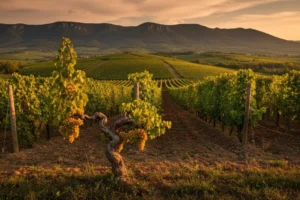
Viognier is very difficult to grow in the vineyard. It is temperamental, prone to disease, and demands a capable and, above all, patient grower. It is always picked fully ripe — neither underripe nor overripe — because such extremes yield the wrong aromatic spectrum in the wine. The alcohol level is always 12.5% or higher. It is one of the few white varieties that in warm vintages can comfortably reach 15% alcohol while still retaining its elegance.
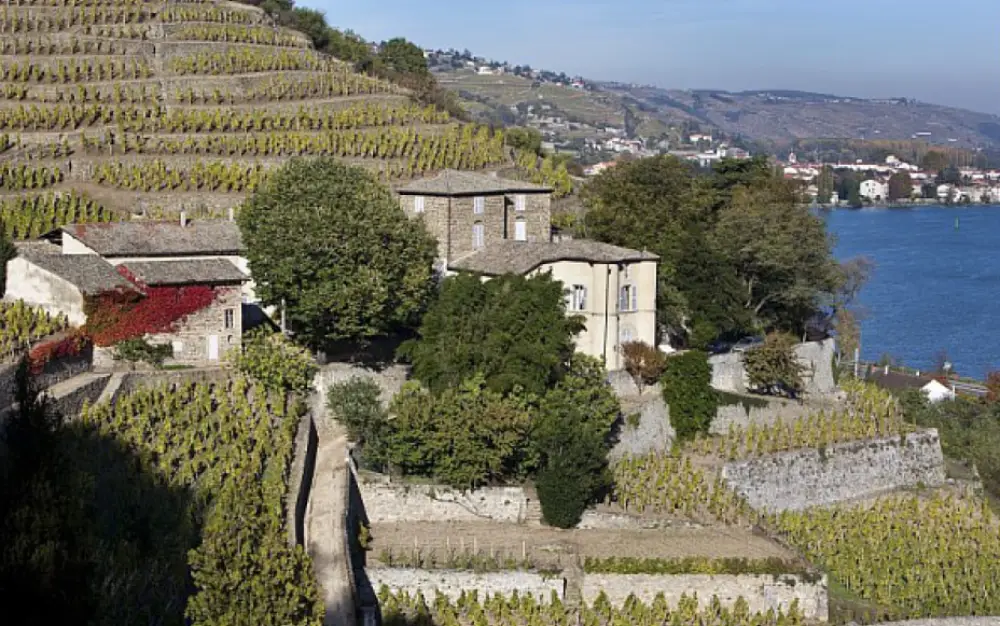
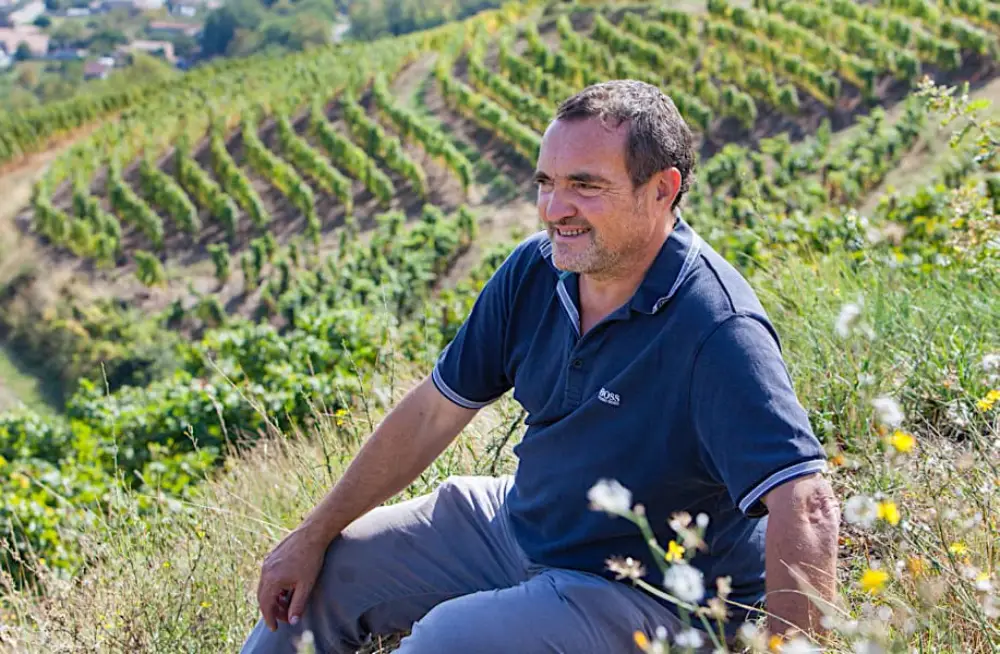
The most important appellations are Condrieu and Château-Grillet on the western bank of the Rhône, 40 km south of Lyon. Condrieu is the key appellation, distinctive for its terraced vineyards in which mechanical work is nearly impossible. The climate is continental, with cold winters and warm summers. Total production in the appellation averages around 360,000 bottles per year.
The most prestigious appellation, Château-Grillet, is in fact a small enclave within Condrieu. It is also one of the very rare so-called monopole appellations, where the entire estate (winery) is owned by a single family or person. Château-Grillet is currently owned by the French billionaire François Pinault, who bought it in 2011. Production of this exceptionally prestigious wine is only around 10,000 bottles per year.

Viognier is also produced in France outside the appellation areas, and beyond the northern Rhône it is found in the southern Rhône and in Languedoc-Roussillon. Among other countries, serious plantings exist in the United States, Australia and Chile.
A curious fact is that Viognier may be blended up to 20% into the famous Côte-Rôtie red-wine appellation in the northern Rhône. The remaining 80% is Syrah. The usual ratio is 92% Syrah to 8% Viognier. Here its role is to lend a more intense aromatic spectrum and to soften the firm, tannic Syrah.
The finest Viognier always comes from the northern Rhône. It is a markedly site-specific variety, and it most loves the terraced vineyards of the northern Rhône. Viognier is typically not intended for long ageing. The optimal drinking window is 3 to 7 years, depending on the wine. The wine itself is of consistent quality and has a unique organoleptic profile. An important component comes from terpenes, which are also found in Riesling. It is therefore no wonder that many Riesling lovers also take to Viognier, even though the two are not related varieties.
Producers from the northern Rhône who, in my opinion, make excellent Viognier:
- Georges Vernay (fuller style)
- Yves Cuilleron (neutral style)
- Stéphane Pichat (great value for the quality)
- André Perret (a traditionalist)
My recommendation is that you absolutely try Viognier. If you are a lover of Chardonnay or of Pošip among the local varieties, the chances that you will enjoy Viognier are high.
This is one of the great white varieties well worth exploring, and it almost always leaves you with the impression that you have discovered something special.