



Southern Styria (Südsteiermark) is an authentic Austrian wine region known for its white wines, and it built its international reputation first and foremost on world-class interpretations of Sauvignon Blanc. The quality of the region’s wines is the result of a unique terroir — the complex interaction of soil, climate, relief and human hand — that gives the wines their distinctive freshness, minerality and pronounced varietal character.
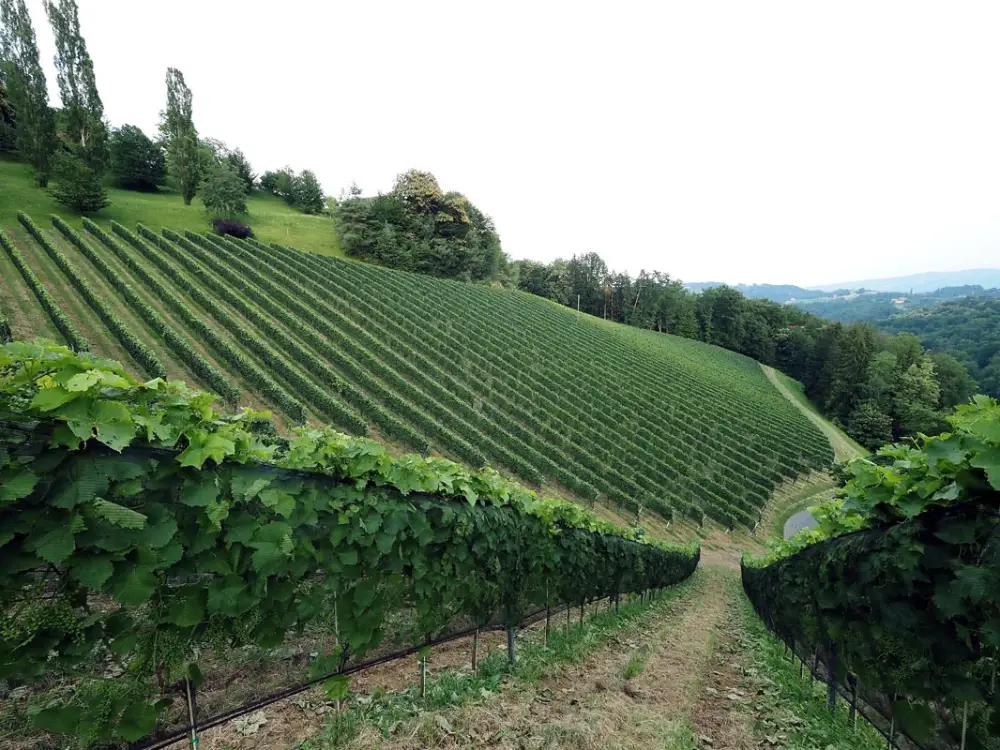
The vineyards stretch across steep hills between 250 and 650 metres above sea level, where the exposure of the slopes allows optimal ripening of the grapes while preserving precious acidity. Gradients often exceed 50%, so much of the vineyard work is done by hand — an approach that allows complete control of the vineyard, selective harvesting and preservation of grape quality.
The geological base of Southern Styria is exceptionally varied. The most common soils are limestone, marl (Opok), schist and sand. Marl, known locally as “opok”, is a mixture of limestone and clay with an exceptional ability to retain water during dry spells while still ensuring good drainage. Such soils give the wines pronounced minerality, precision and longevity. On higher sites schist prevails, further underlining the elegance, freshness and complexity of the wines, while limestone soils contribute finesse of structure and more pronounced acidity.

Southern Styria is under the influence of an Alpine climate, but also of warm air pushing in from the Pannonian plain. During the growing season the warm air from the east allows full ripening of the grapes, while the cold air descending from the Alps at night refreshes the bunches and preserves aromatic compounds and natural acidity. These large day-night temperature swings are one of the key quality factors of the region’s wines, and especially important for aromatic white varieties such as Sauvignon Blanc and Gelber Muskateller (yellow muscat), the most widely planted here.
Also important is sufficient rainfall, relatively evenly distributed through the year, so the vineyards rarely suffer drought, while good air circulation on the steep slopes reduces the risk of fungal disease — allowing many producers to apply sustainable, organic or biodynamic growing methods.

The most widely planted white varieties of the region are Sauvignon Blanc, Gelber Muskateller, Welschriesling (Graševina), Morillon (the local name for Chardonnay), Riesling, Weissburgunder (Pinot Blanc) and Grauburgunder (Pinot Gris), while among the reds Zweigelt and Blauburgunder (Pinot Noir) dominate.
In recent decades producers have placed ever greater emphasis on preserving biodiversity, organic production and minimal cellar intervention, aiming to transfer the energy and specificity of each microsite into the wine as faithfully as possible.
The region is famous for its wine roads — the Südsteirische Weinstrasse, the Sausaler Weinstrasse and the Schilcher Weinstrasse — which link vineyards, family wineries, panoramic viewpoints and traditional, well-kept villages, offering the traveller an unforgettable experience.
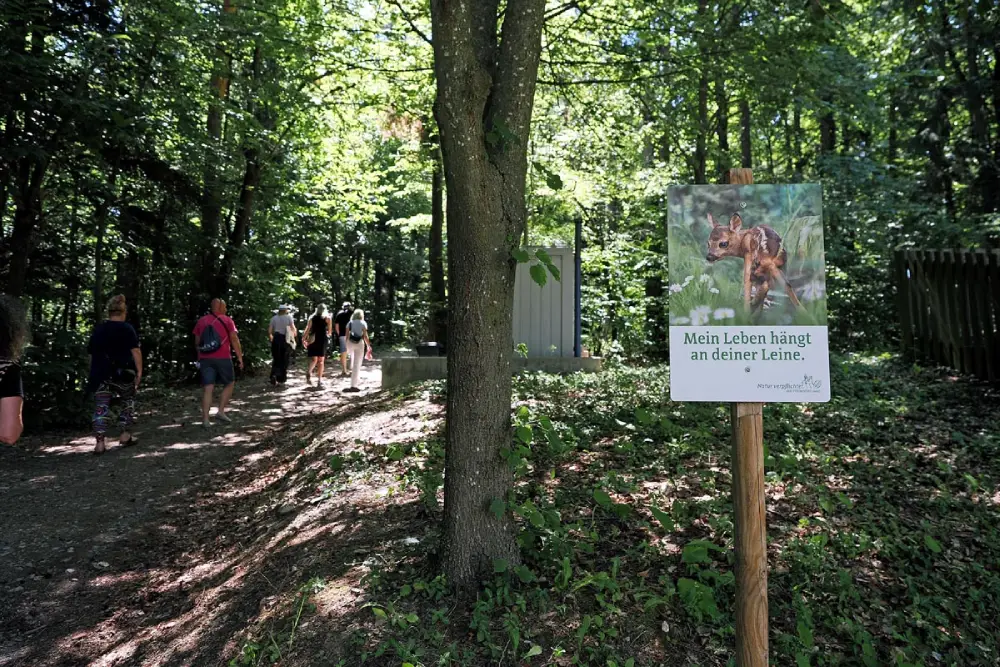
We visited the wineries Kögl, Johann Schneeberger, Wolfgang Maitz and Adam-Lieleg, which show different expressions of terroir through different interpretations but with a common denominator — precision. All the wines are technically faultless, so philosophy and terroir specifics come through in finesse.
Tourism and gastronomy
Southern Styria lies roughly 150 kilometres from Zagreb, so it is easily accessible to Croatian visitors, and in recent years it has seen growing interest as a destination for short breaks and wine-and-food tourism.

The region is home to more than 350 wineries and around 180 traditional taverns (Buschenschank), an important part of the local gastronomic offering. Alongside a well-developed wine culture, Southern Styria boasts a significant dining scene, including Michelin-starred restaurants.
The cuisine is based on local produce and traditional dishes prepared with modern culinary techniques. We visited the Lieperts restaurant, a Michelin-star holder and an excellent example of the synergy between local gastronomy and haute cuisine.

The tourism offering goes beyond wine and food to include a developed network of walking and cycling trails, viewpoints, cultural and historical sites, and producers of traditional foods — among which Styrian pumpkin seed oil holds a special place. In the village of Heimschuh is Ölmühle Hartlieb, a family oil mill that has been producing top-quality oils for more than a century. Styrian pumpkin seed oil is one of Austria’s best-known gastronomic products and carries a protected designation of origin.

Besides a state-of-the-art oil-production facility where the whole process can be seen, from seed to finished product, the mill also offers a museum with exhibits for oil processing up to 300 years old.
A place well worth stopping at is Die Amtmann, a family estate with a restaurant set in a small botanical garden beside a rose plantation, where one eats and drinks superbly. The wild-mushroom soup, the frittata in pumpkin seed oil and the poppy-seed cake were very good, accompanied by wines from their own vineyards.

Just an hour and a half from Zagreb lies Southern Styria — a region of exceptional natural beauty, top wines and excellent gastronomy that, beyond the quality of its offering, is also accessible thanks to what is probably the best value for money in Western Europe.


